Reverse Osmosis (RO) is one of the most effective ways to purify water, but the science behind it can sound more complicated than it actually is. At its core, an RO system uses pressure and a specialized membrane to separate water from many of the dissolved substances and contaminants it contains. The result is purified water that can be used for drinking, food and beverage preparation, commercial processes, and other applications where consistent water quality matters.
So, how does reverse osmosis work? Most systems don’t rely on the RO membrane alone. Instead, water travels through several filtration stages, with each stage performing a different job. Pre-filters prepare the water, the reverse osmosis membrane performs the primary purification, and post-treatment can further refine the finished water.
Understanding these basic steps can make it much easier to determine whether reverse osmosis is the right water treatment solution for your business.
What Is Reverse Osmosis?
To understand how reverse osmosis works, it helps to first understand the process of osmosis. Osmosis is a natural process in which water moves across a semi-permeable membrane toward a solution with a higher concentration of dissolved substances.
Reverse osmosis essentially pushes that process in the opposite direction. Pressure is applied to the incoming water, forcing it through a semi-permeable membrane. Water molecules can pass through the membrane, while many dissolved salts, minerals, metals, and other substances are rejected.
The water that successfully passes through the membrane is commonly called permeate or product water. The water carrying the rejected contaminants away from the membrane is known as concentrate, reject water, or brine. This separation process is what allows an RO system to produce water with significantly fewer dissolved substances than the original source water.
How Does a Reverse Osmosis Membrane Work?
The RO membrane is the heart of the system. It contains an extremely thin, selective barrier designed to allow water molecules to pass while rejecting many larger or dissolved substances. Pressure provides the force necessary to move the incoming water across this membrane. As the feed water moves through the system, it is separated into two streams. Purified water passes through the membrane and continues toward storage or its point of use. The rejected contaminants remain concentrated in another portion of the water, which flows away from the membrane.
RO membranes can reduce a wide range of dissolved substances, although the exact performance depends on the membrane, system design, source water, pressure, temperature, and contaminants involved. This is why professional system selection and water testing are important, particularly for commercial applications with specific water quality requirements. The membrane also explains why pretreatment is so important. Sediment, chlorine, hardness minerals, and other substances can foul or damage certain membranes. Removing or managing these substances before they reach the membranes can help maintain performance and extend their useful life.
How Does a Reverse Osmosis Water Filter Work? 5 Common Stages
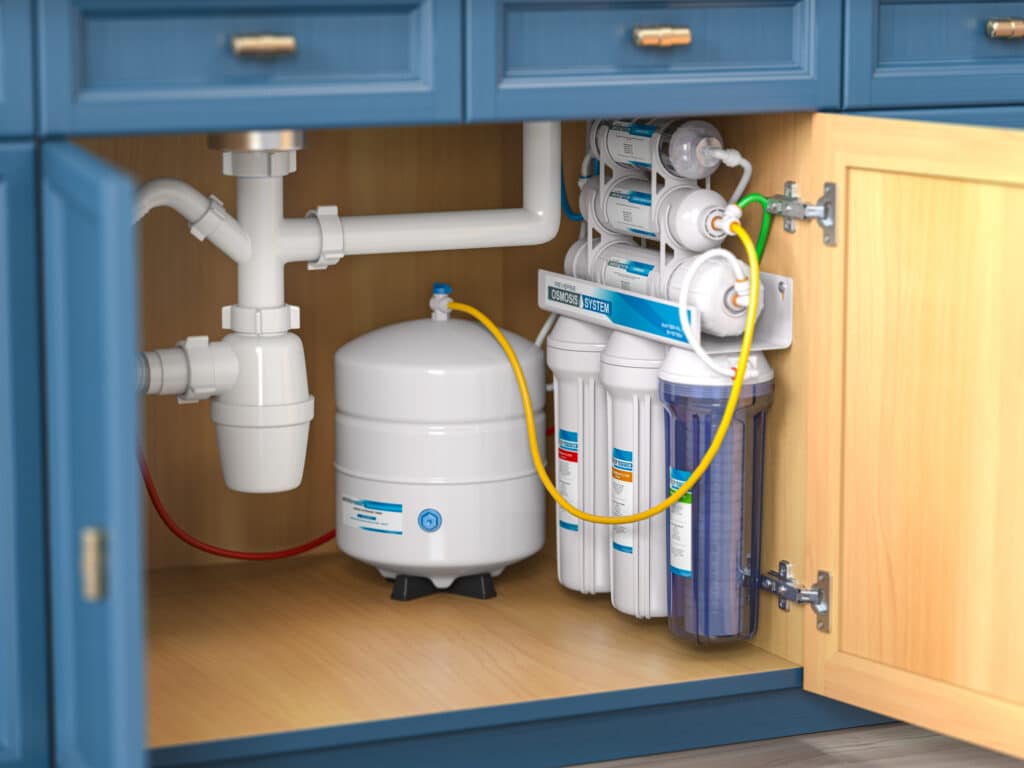
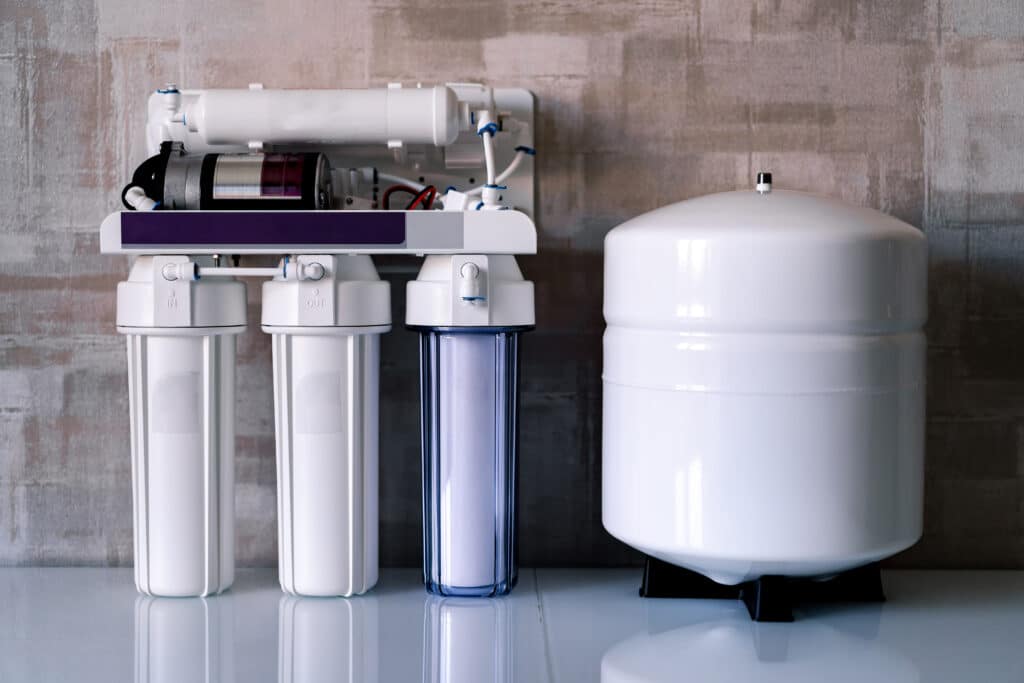
It’s important to think of an RO system as a sequence rather than a single filter. Although configurations vary, a typical system moves water through several stages before the finished water reaches the user.
Stage 1: Sediment Pre-Filtration
The process usually begins with a sediment filter. Incoming water can contain sand, dirt, rust, silt, and other suspended particles. The sediment filter captures these larger particles before they can travel deeper into the RO system. This stage doesn’t provide the same level of purification as the RO membrane. Instead, its primary job is protection. Removing sediment helps prevent clogging and reduces unnecessary wear on downstream components. For commercial systems processing substantial volumes of water, effective pretreatment can be particularly important for maintaining reliable operation.
Stage 2: Carbon Pre-Filtration
After sediment filtration, water may pass through one or more carbon filters. Activated carbon is commonly used to reduce chlorine and certain substances that contribute to undesirable tastes and odors. Chlorine removal can also be important for protecting certain types of RO membranes from damage. The carbon stage, therefore, improves water quality while preparing it for the primary reverse osmosis process. The exact pre-treatment configuration depends on the source water. A professional water analysis can identify which contaminants are present and determine which pretreatment methods are appropriate.
Stage 3: Reverse Osmosis Membrane
Next comes the central step in the reverse osmosis water filtration process. Pressure drives the pretreated water toward the RO membrane, where it is separated. Water molecules pass through the membrane to become purified product water, while many dissolved salts, minerals, metals, and other impurities are rejected and carried away in the concentrate stream. This is an important difference between RO and basic filtration. Conventional filters generally capture particles based on their physical properties, whereas reverse osmosis uses a membrane-based separation process to remove many dissolved substances that ordinary sediment filtration cannot remove.
Stage 4: Post-Filtration
After passing through the RO membrane, purified water may receive additional treatment before use. Many systems include an activated carbon post-filter to further improve taste and odor. Other post-treatment technologies may be incorporated depending on the intended application and desired finished-water quality. Commercial systems, in particular, can be designed around specific water requirements rather than relying on a standard configuration.
Stage 5: Storage and Distribution
Once treatment is complete, purified water must reach the equipment, faucet, or process where it’s needed. Some RO systems use storage tanks, so purified water is available when demand increases. Others are designed to produce and distribute water to meet the facility’s needs. For businesses, system capacity matters considerably. A properly designed RO system needs to produce enough purified water to accommodate both routine usage and periods of higher demand.
What Does a Reverse Osmosis System Remove?
Knowing how a reverse osmosis system works naturally leads to another question: What does the process actually remove? Depending on the system and membrane, reverse osmosis can reduce many dissolved salts, minerals, metals, and other contaminants.
RO is commonly used to reduce total dissolved solids and substances such as sodium, calcium, nitrates, and certain heavy metals. However, no water treatment system should be assumed to remove every possible contaminant. The effectiveness of an RO system depends on its design and the contaminants present in the source water. Businesses with specific water quality concerns should have their water tested and select equipment designed to address those conditions.
Why Does an RO System Produce Reject Water?
Many are surprised to discover that not all incoming water becomes purified product water. The reject stream is an essential part of the process. As water passes through the membrane, rejected dissolved substances become concentrated on the feed side. A portion of water carries those substances away so they don’t simply accumulate on the membrane. The ratio of purified water to reject water varies based on system design and operating conditions. Properly designed commercial equipment can help balance purification requirements with water efficiency.
Why Pressure Matters in Reverse Osmosis
Pressure is what makes “reverse” osmosis possible. Without sufficient pressure, the system cannot effectively overcome natural osmotic pressure and move water through the membrane in the desired direction. Commercial systems may use pumps to maintain the pressure required for consistent production. If operating pressure falls outside the appropriate range, purified water output and system performance can decline. This is another reason commercial RO systems should be properly sized and maintained rather than selected based solely on the amount of water a facility uses each day.
Does a Reverse Osmosis System Need Maintenance?
Yes, each filtration stage has a limited service life. Sediment and carbon filters need periodic replacement, while the RO membrane generally lasts longer but eventually requires service or replacement. Maintenance intervals depend on source-water quality, system usage, equipment specifications, and operating conditions. Neglecting pre-filter replacement can also affect the membrane. For example, a clogged sediment filter can restrict flow, while exhausted pretreatment components may allow substances that harm the membrane to reach it. Regular professional maintenance helps keep the entire treatment sequence working together as intended.
Residential vs. Commercial Reverse Osmosis Systems
Residential and commercial RO systems rely on the same basic reverse osmosis principles, but their scales and capabilities can differ significantly. A residential system might provide purified drinking and cooking water at a single faucet. A commercial facility may need hundreds or thousands of gallons to support restaurants, hotels, offices, manufacturing processes, or other operations.
Commercial systems, therefore, need to account for factors such as source-water chemistry, daily consumption, peak flow requirements, storage capacity, operating pressure, and the required quality of the finished water. Proper sizing ensures the system can keep up with demand without compromising performance.
Is Reverse Osmosis Right for Your Business?
Reverse osmosis can be an effective solution when a business needs to reduce dissolved solids or achieve more consistent purified water. However, whether RO is the best option depends on what is already in your water and how your facility plans to use the treated water. Water testing is an important first step. Once the source water has been evaluated, a water treatment professional can determine whether reverse osmosis is appropriate and what pretreatment, capacity, and post-treatment components the system may require. Understanding how reverse osmosis works behind the scenes gives you the foundation to ask the right questions, but a system designed around your facility’s actual conditions will provide the most reliable long-term results.
Improve Your Water Quality With Step Saver
If your business needs cleaner, more consistent water, Step Saver can help you determine whether reverse osmosis is the right solution. For more than 25 years, Step Saver has provided commercial water treatment solutions to businesses throughout California, Nevada, and Utah.
Our team can evaluate your water quality and operational needs to recommend a system designed for your facility. From commercial reverse osmosis installation and repair to routine filter replacement, Step Saver provides the professional support needed to keep your water treatment equipment performing reliably. Ready to improve your business’s water quality? Contact Step Saver today to discuss your water treatment needs and find a reverse osmosis solution built around your operation.