A commercial reverse osmosis (RO) system can provide your business with a dependable supply of purified water, but the system requires regular maintenance to continue working effectively. One of the most important parts of that maintenance is replacing filters before they become clogged, exhausted, or ineffective. So, how often do you need to replace reverse osmosis filters in a commercial system? There isn’t a single schedule that works for every business. Filter type, water quality, daily usage, system size, and operating conditions can all affect how frequently replacement is necessary. Some filters may need attention every few months, while an RO membrane can potentially remain in service for several years under the right conditions.
Understanding the typical replacement intervals (and the warning signs that a filter may be reaching the end of its useful life) can help businesses avoid declining water quality, unnecessary strain on the RO system, and unexpected downtime.
How Long Do Reverse Osmosis Filters Last?
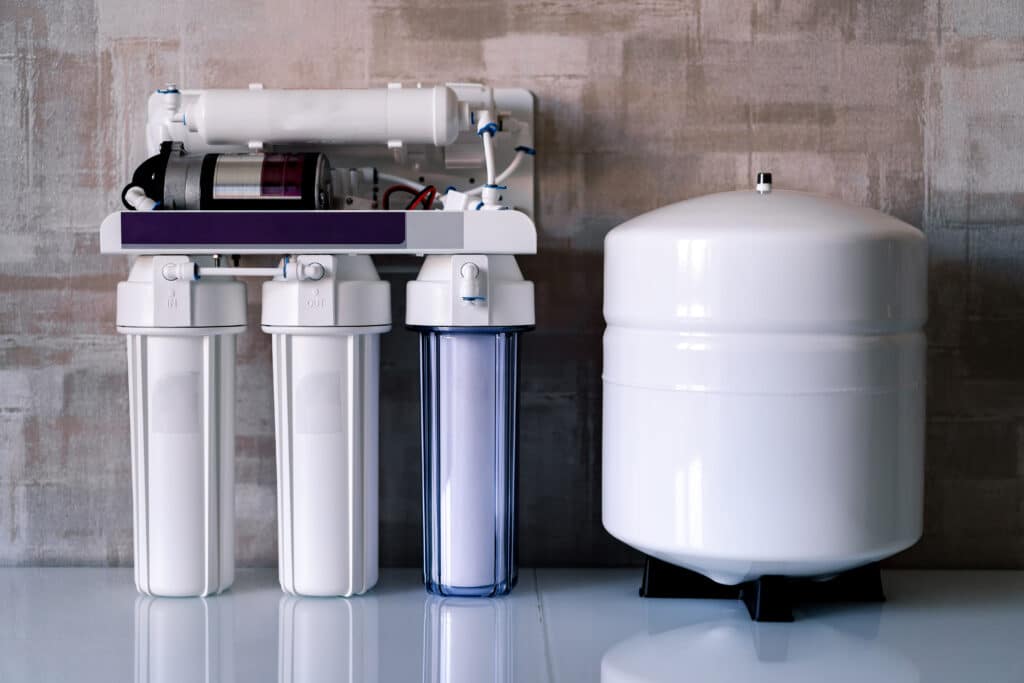
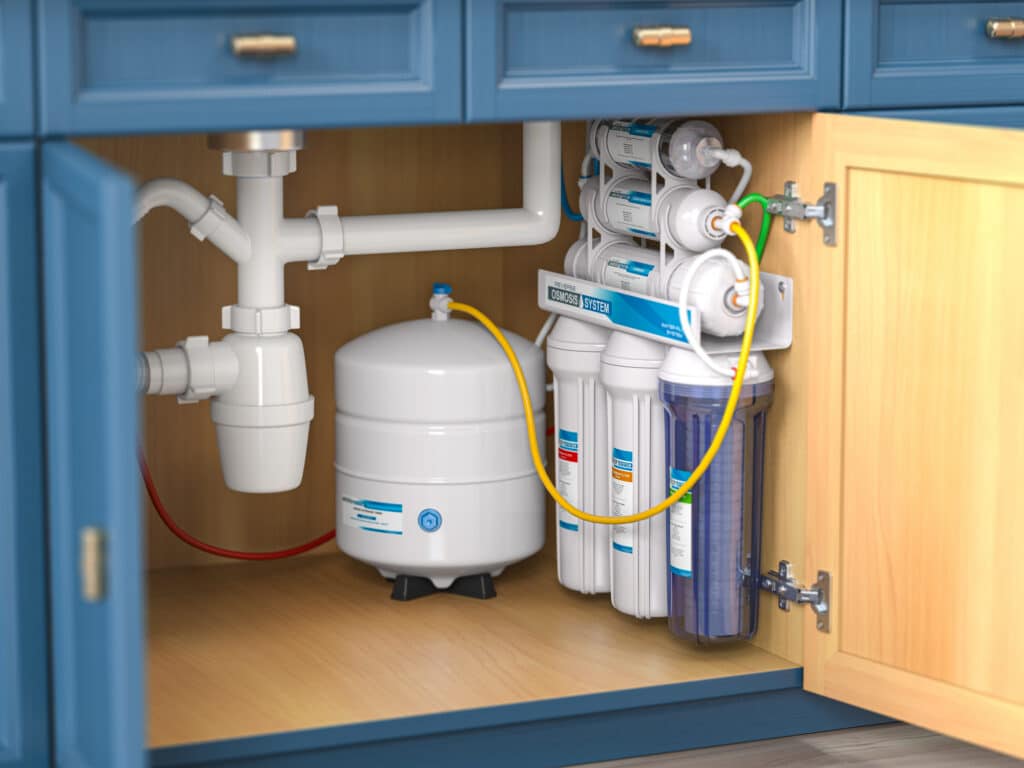
If you’re wondering how long reverse osmosis filters last, the answer depends largely on which filter you’re talking about. A reverse osmosis system generally contains multiple filtration stages, and each performs a different job.
Pre-filters, for example, protect the more expensive RO membrane by removing contaminants such as sediment and chlorine before water reaches it. The membrane then removes many dissolved contaminants, while post-filters may provide additional treatment before the purified water reaches its point of use. Because each stage encounters different contaminants and performs a different function, replacement schedules vary. Commercial systems add another variable because water damage may be substantially more serious than it would be in a residential setting. Instead of treating filter replacement as a one-size-fits-all maintenance task, businesses should establish a schedule based on their particular system and water conditions.
Typical RO Filter Replacement Frequency
Although your system manufacturer and water treatment provider should determine your specific RO filter replacement frequency, general replacement ranges can provide a useful starting point.
Sediment Pre-Filters: About Every 3–12 Months
Sediment filters are usually the first line of defense. They capture dirt, rust, sand, silt, and other suspended particles before those materials can reach more sensitive parts of the system. Because they encounter untreated incoming water, these filters can become clogged relatively quickly. A facility with significant sediment in its source water may require replacement toward the shorter end of the range, while cleaner source water may allow a filter to last longer. Neglecting sediment filter replacement can reduce water flow and put unnecessary pressure on the rest of the RO system.
Carbon Pre-Filters: About Every 6–12 Months
Carbon filters are commonly used to reduce chlorine and other compounds that can affect water quality or damage certain RO membranes. How quickly a carbon filter becomes exhausted depends on water chemistry and the volume of water passing through it. Businesses with high water demand may therefore need more frequent replacement than facilities that use relatively small quantities of purified water. Following the appropriate replacement schedule helps protect the membrane and maintain the overall effectiveness of the system.
RO Membranes: Often Every 2–5 Years
When someone asks, how long does a reverse osmosis filter last, they may actually be referring to the RO membrane. Unlike pre-filters, membranes are not normally replaced every few months. A properly maintained membrane may remain effective for several years. However, membrane lifespan depends heavily on source water quality, pretreatment, system operation, and whether routine maintenance is performed on schedule.
Poorly maintained pre-filters can expose the membrane to contaminants that shorten its lifespan. Scaling, fouling, or chemical damage may also require a membrane to be replaced sooner than expected. Rather than relying exclusively on age, commercial businesses should monitor system performance and water quality to determine when membrane replacement is actually necessary.
Post-Filters: About Every 6–12 Months
Some RO systems include a post-filter as a final treatment stage. Depending on the system, this may help address taste, odor, or other water quality concerns after the RO process. These filters commonly require replacement every six to twelve months, although actual intervals depend on water usage and system specifications. As with every other filtration stage, the manufacturer’s recommendations should take priority over a general timeline.
What Determines How Often Reverse Osmosis Filters Should Be Changed?
When considering how often reverse osmosis filters should be changed, businesses need to look beyond the calendar. Water conditions and system demand can cause two otherwise identical RO systems to have very different maintenance requirements. Source water quality is one of the biggest factors. Water containing substantial sediment, hardness minerals, chlorine, or other contaminants may place greater demands on filters and membranes. Proper pretreatment can help manage these conditions and potentially extend the service life of RO components.
Water consumption matters as well. A busy hotel, restaurant, manufacturing facility, or other high-volume operation may process significantly more water than a small commercial property. The greater the volume passing through the filters, the faster their capacity may be used. Operating pressure, system design, temperature, and the quality of routine maintenance can also influence filter life. This is why a professional maintenance schedule based on the facility’s actual operating conditions is more useful than relying solely on generic replacement intervals.
Signs Your Commercial RO Filters Need Replacement
A maintenance schedule provides a baseline, but businesses should also pay attention to changes in system performance between scheduled service appointments. Reduced water production or noticeably lower flow can indicate that a filter has become clogged. Changes in taste or odor may signal that a carbon or post-filter is no longer performing effectively. A decline in purified water quality or an increase in total dissolved solids (TDS) can point to membrane performance issues.
Changes in system pressure may also indicate restrictions or other problems that deserve attention. For businesses that depend on purified water for daily operations, waiting until the system stops working altogether can lead to avoidable downtime. If you’re searching for answers because you’ve already noticed a decline in performance, it may be better to have the system inspected rather than simply waiting for the next scheduled replacement date.
Why Routine RO Maintenance Matters for Businesses
Filter replacement isn’t only about maintaining the quality of the water coming out of the system. It also protects the equipment responsible for producing that water. Clogged or exhausted filters can force the system to operate under less-than-ideal conditions. Neglected pre-filters may also allow contaminants to reach the RO membrane, potentially shortening the lifespan of one of the system’s most important components.
Routine maintenance provides an opportunity to evaluate more than filters. A professional can check pressures, inspect components, assess water quality, identify leaks, and make sure the system is producing water as intended. For businesses, preventive service can also make maintenance more predictable. Replacing a relatively inexpensive filter at the appropriate time is preferable to dealing with premature membrane failure or an unexpected interruption to your purified water supply.
Don’t Rely on a Generic Replacement Schedule
General recommendations are helpful, but they shouldn’t be the only factor determining your maintenance schedule. The best answer to how often to replace reverse osmosis filters comes from considering your equipment, incoming water, operating volume, and performance data together. A business using thousands of gallons of water under challenging source-water conditions shouldn’t necessarily follow the same replacement schedule as a facility with lower demand and better incoming water quality.
Professional water testing and regular system inspections can help establish a replacement schedule based on your actual conditions. This approach prevents filters from being replaced unnecessarily while also reducing the risk of leaving exhausted filters in service for too long.
Commercial Reverse Osmosis Installation & Repair
Proper system design can make routine maintenance easier from the beginning. Professional commercial reverse osmosis installation & repair can ensure the system is appropriately sized for your water demand, configured for your source water, and maintained according to the needs of your operation. If an existing system isn’t producing the quality or quantity of water it once did, professional service can also help determine whether the problem involves a filter, membrane, system settings, or another component rather than relying on guesswork.
Keep Your Commercial RO System Running with Step Saver
Your business depends on reliable water, and your reverse osmosis system needs regular attention to continue delivering it. Step Saver provides professional reverse osmosis system service, filter replacement, maintenance, and water treatment solutions for commercial businesses throughout California, Nevada, and Utah.
With more than 25 years of experience, Step Saver can help determine an appropriate maintenance and filter replacement schedule based on your system, water quality, and daily demand. Whether it’s time for routine filter replacement, your RO membrane isn’t performing as expected, or you need help maintaining an existing commercial system, our team can provide the support necessary to keep your equipment operating efficiently.
Don’t wait for declining water quality or an unexpected system problem to make RO maintenance a priority. Contact Step Saver today to schedule commercial reverse osmosis service and keep your business supplied with dependable, high-quality water.