Hard water is one of those problems that sneaks up on you. First, it’s a little scale around the faucet. Then your water heater starts running less efficiently. Then you’re replacing an appliance years earlier than you expected. By the time most people start researching a water softener, hard water has already cost them more than the system would have.
So, how much does a water softener cost? The range is wide, and the answer depends on more variables than most buying guides admit upfront. This breakdown covers everything: the unit, installation, ongoing maintenance, and what replacement looks like down the road.
Water Softener System Cost by Type
The unit price is where most people start, and it varies more than you’d expect.
| Salt-based ion exchange | $400–$2,500 | Most homes, high-hardness areas |
| Salt-free conditioner | $500–$3,000 | Moderate hardness, low maintenance |
| Dual-tank system | $1,000–$4,000 | Large households, continuous use |
| Whole-home/commercial | $2,000–$20,000+ | Large facilities, multi-unit buildings |
These are equipment costs only. They don’t include labor, permits, or the plumbing work that sometimes comes with properly connecting a system.
Salt-based ion exchange systems are still the most widely used option for homes in high-hardness areas. They physically pull calcium and magnesium out of the water, making them the most effective at doing so. Salt-free conditioners are lower-maintenance but work better in moderate-hardness situations. Dual-tank systems keep one tank regenerating while the other stays active, which matters if your household can’t tolerate any gap in soft water.
Water Softener Installation Cost
This is the part that catches people off guard. They budget for the unit, forget about installation, and then the total comes in higher than expected.
The water softener installation cost for a standard residential system typically ranges from $200 to $500. That’s for a straightforward install, accessible utility room, existing drain line nearby, and no major plumbing modifications needed. When those conditions aren’t met, the number goes up.
Things that push the cost to install a water softener higher:
- Tight or hard-to-reach spaces like crawl spaces or cramped utility closets take more time
- Older plumbing that needs updates before a softener can be safely connected
- No existing drain line near the installation point
- Local permit requirements—some municipalities require permits for water treatment work, and your installer should know what applies in your area
- System size—larger units and dual-tank setups take more labor and materials
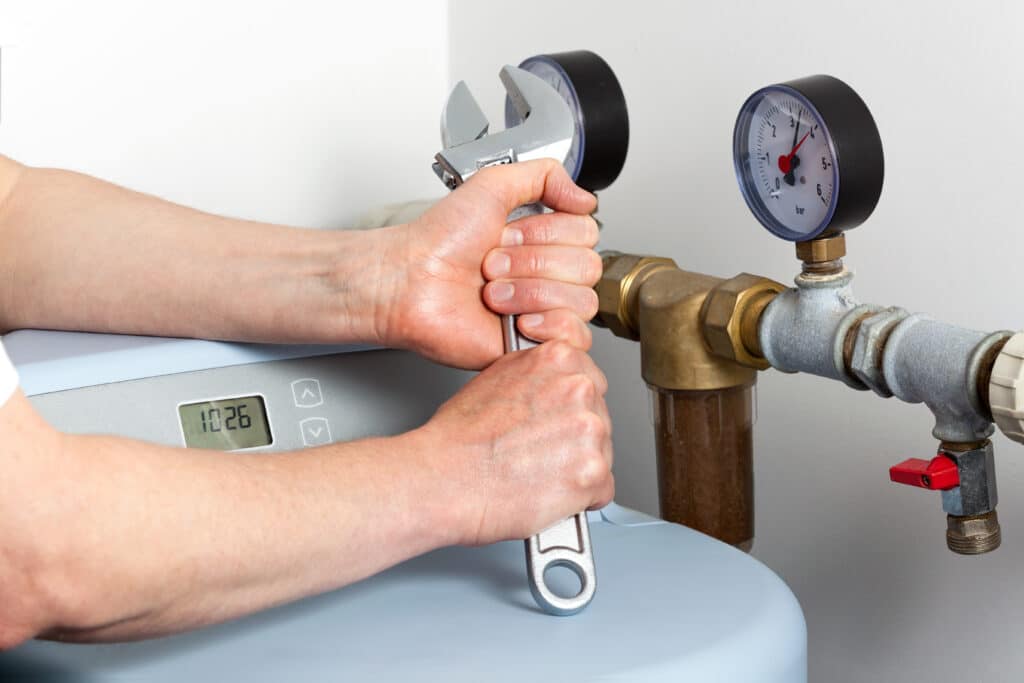
DIY installation is technically possible with some systems, but it’s not something most homeowners should attempt without plumbing experience. A system that isn’t installed correctly can cause backflow issues, fail to regenerate properly, or void the manufacturer’s warranty. Step Saver’s team handles professional water softener installation from assessment through startup, so nothing gets missed.
What Drives the Cost of a Water Softener
Two systems with the same price tag can perform very differently depending on what’s actually inside them. Here’s what you’re paying for when you go up in price:
1. Grain capacity
Grain capacity is the amount of hardness a system can remove before it needs to regenerate. A family of four in a moderately hard water area generally needs a system rated between 32,000 and 48,000 grains. Go too small, and you’re regenerating constantly—using more salt and more water, and wearing the resin out faster. Go too big, and you’re paying for capacity you’ll never use. Getting the size right matters more than most people realize. Understanding how a water softener works helps clarify why sizing is so tied to performance and running costs.
2. Smart features
Smart features like demand-initiated regeneration, app monitoring, and salt level alerts add to the unit cost but often reduce your salt and water costs over time. A system that regenerates based on actual usage rather than a fixed schedule uses noticeably less salt annually, which starts offsetting the price difference within a few years.
3. Build quality
Build quality shows up in the valve, the resin, and the brine tank. Cheaper systems use components that wear faster. If you’re comparing two units with similar specs and a significant price gap, it’s worth asking what’s different under the hood.
Ongoing Costs After Installation
1. Salt
Salt is the biggest ongoing expense for salt-based systems. A typical household uses roughly 6 to 10 pounds of salt per regeneration cycle. At current retail prices, around $5 to $12 per 40-pound bag, depending on type, annual salt costs range from $100 to $400 for most homes. That number climbs if your water is very hard or your household uses a lot of water.
2. Water usage
Each regeneration cycle flushes the resin tank with 20 to 80 gallons, depending on system size. It’s not dramatic, but it’s worth factoring in.
3. Routine maintenance
Routine maintenance runs $100 to $300 per year for most systems. That covers annual checkups, occasional resin cleaning, and brine tank maintenance every year or two.
4. Repairs
Repairs are the wildcard. Minor issues, including valve seals and injector cleaning, run $100 to $300. A full resin replacement costs $200 to $500 with labor. Most systems won’t need major repairs in the first several years with proper upkeep, but older units are a different story.
Water Softener Replacement Cost
If your commercial water softener is starting to fail, you’re weighing repair against replacement, and the math isn’t always straightforward. The water softener replacement cost for commercial systems is often comparable to buying new, which makes the decision less obvious than it sounds.
Most commercial water softeners last 10 to 15 years under normal operating conditions, though systems running in high-demand environments may see that timeline shortened. When they start going, the signs are hard to miss: water hardness returns even though the system is running, salt consumption spikes, resin beads start showing up at the tap, or the control valve fails in a way that costs more to fix than the unit is worth.
For a standard commercial replacement, budget $3,000 to $10,000 or more all-in, depending on system size, capacity requirements, and labor. In many cases, replacing an aging system with a newer, more efficient model pays for itself within a few years; modern commercial softeners use significantly less salt and water per regeneration cycle than units from 10 or more years ago, which adds up quickly at commercial scale.
Is the Water Softener Cost Worth It?
A study by the Water Quality Research Foundation found that gas water heaters running on hard water lost up to 48% efficiency over time due to scale buildup, while units on softened water maintained their original factory efficiency for up to 15 years, findings that have continued to be cited by the Water Quality Association as recently as 2022. Softened water also reduces detergent use by 50% or more, soft water lathers far more readily than hard water, so less product is needed to get the same result.
When you add up longer appliance life, reduced energy costs, lower cleaning product use, and less plumbing maintenance, the math tends to work out in favor of installation, especially in areas like Utah, Nevada, and Southern California, where water hardness is consistently high.
Ready to Figure Out What You Need?
The total water softener cost, including the unit, installation, and ongoing upkeep, is real money. But so is what hard water costs you every year in appliance wear, energy inefficiency, and premature repairs.
Step Saver works with businesses across Utah, Nevada, and California to find the right system for their water quality and usage. From professional water softener installation to routine service, the team handles it from start to finish. Contact us to get a quote and figure out what actually makes sense for your situation.