
Many businesses face challenges when their water is not clean enough for daily operations. Mineral deposits can clog equipment, impurities may change the taste of products, and inconsistent water quality often results in wasted batches or higher maintenance expenses. These issues can slowly consume valuable time and money, especially in industries that rely heavily on water throughout production.
For this reason, many commercial facilities seek dependable purification systems that meet their needs. Two popular choices are reverse osmosis (RO) and distillation. Both remove impurities, but they work in different ways. Reverse osmosis uses a delicate process to filter out dissolved solids and contaminants. Distillation boils water and then collects the steam, leaving impurities behind.
Both methods provide clean water, but they differ in performance, cost, and scalability. This blog provides a comparison of reverse osmosis vs. distilled water to help you decide which system fits your needs, enabling you to improve your facility’s water quality.
What Is Reverse Osmosis?
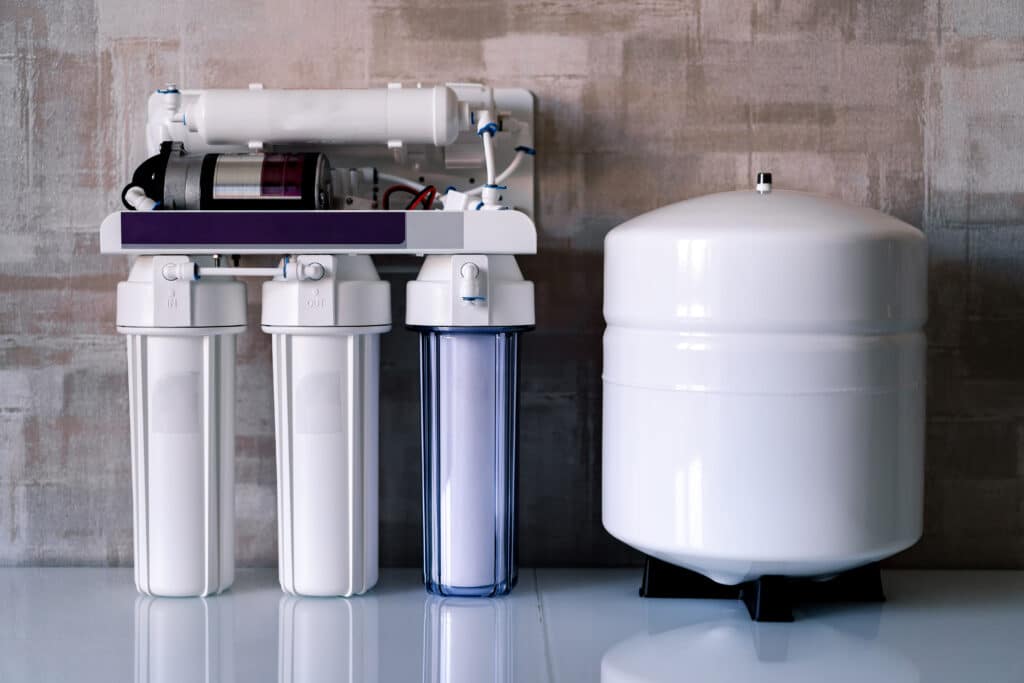
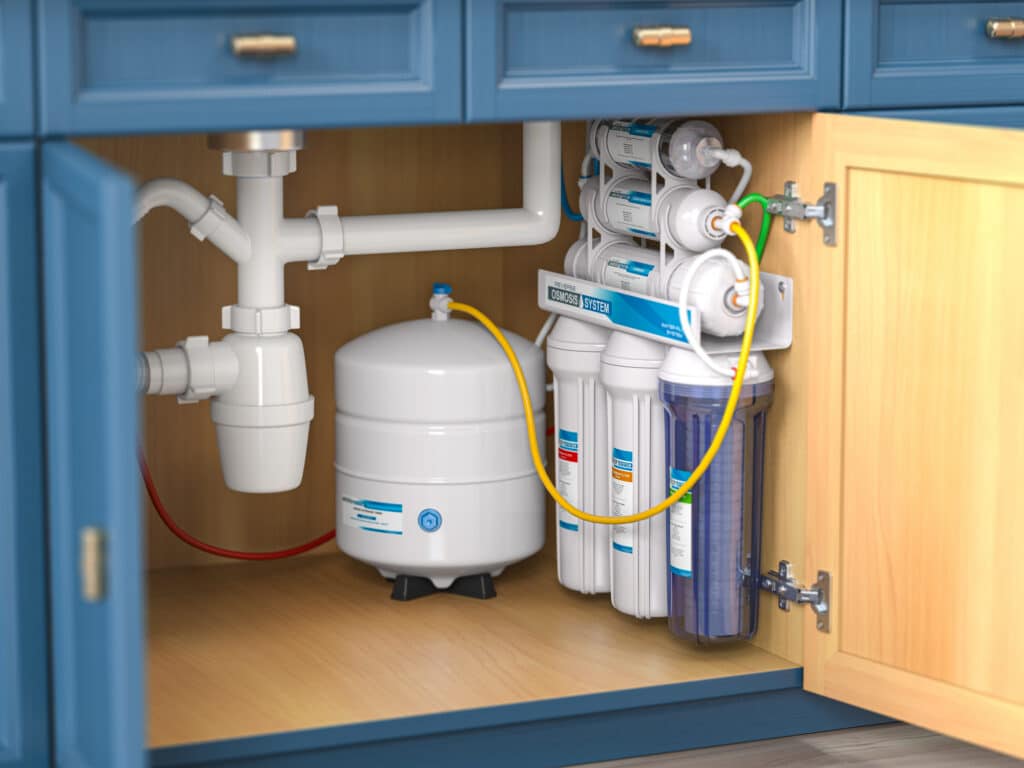
Many business owners wonder, “Is reverse osmosis water the same as distilled water?” and the answer is no. Reverse osmosis is a popular method for producing clean water for businesses and homes. RO systems use pressure to push water through a special filter that only lets water molecules pass, blocking salts, minerals, and other impurities. This produces purified water for use in production, processing, or labs.
In most commercial RO systems, purification happens in 4 stages:
- The water goes through a sediment filter that removes dirt, sand, and rust.
- It then passes through a carbon block filter to eliminate chlorine, chemicals, and odors.
- The next stage is in the RO membrane, where most dissolved solids are separated.
- Many systems include a UV sterilizer or a final polishing filter to ensure that any remaining microorganisms are neutralized.
Each stage builds on the previous one to create a steady flow of clean, consistent water.
Reverse osmosis works well, is dependable, and can be scaled up for larger needs. It uses less power than distillation and can operate continuously, which is ideal for large businesses.
Industries such as food, pharmaceuticals, and manufacturing rely on it for consistent water quality. Companies like Step Saver supply and install RO systems that meet demanding requirements, allowing businesses to maintain high performance and save money.
What Is Water Distillation?
When comparing purification methods, many facilities consider distilled water vs. reverse osmosis water. The significant contrast comes from how each system removes impurities.
Water distillation is a proven method for purifying water. First, water is heated until it becomes steam. As the steam rises, it leaves behind impurities like salts, minerals, and heavy metals. When the steam cools, it turns back into liquid, producing clean, mineral-free water. This process removes nearly all substances that do not vaporize, resulting in very pure and consistent water.
Due to its high level of purity, distilled water is widely used in laboratories, medical facilities, and specialized manufacturing processes.
Still, distillation has some downsides when used for larger amounts of water. It requires excessive amounts of energy, as the water needs to be boiled and cooled repeatedly. Additionally, it only produces purified water in batches, rather than continuously, which limits the amount produced compared to RO systems.
Over time, minerals can accumulate in the equipment used to heat and cool water, resulting in increased maintenance and higher costs. For companies that require a consistent supply of purified water, distillation may not be the most suitable option. It does provide very pure water, but it also requires a significant amount of time and energy, and may not be efficient in the long run.
Which Method Best Fits Your Commercial Needs?
Choosing reverse osmosis water vs. distilled water depends on how your business uses purified water and how often you need it.
Many companies choose reverse osmosis when they need a constant supply of purified water. RO systems run all day, use less energy, and require little maintenance. They can also keep up as production increases. That is why industries such as food and beverage, hospitality, car washes, and manufacturing often utilize commercial RO systems.
Distillation is particularly suitable for businesses that require pure water in minimal quantities. Labs, pharmaceutical companies, and research centers often use distilled water because it has no minerals or other contaminants. While distillation requires more time and energy, it provides these fields with the control they need.
Facilities located in areas with hard water often choose reverse osmosis because it continuously produces soft, mineral-free water with minimal energy use and no need for constant maintenance. Some industries even combine these methods to reach higher purity standards. For example, pharmaceutical and biotechnology manufacturers often use reverse osmosis as the first step, followed by distillation. This two-step process removes most minerals and organics before distilling the water, increasing speed and energy efficiency.
The result is less scale buildup, longer equipment life, and more reliable performance. In these industries, every treatment stage is crucial, so combining methods yields optimal purity, efficiency, and system health.
It is essential to compare the differences between distilled and reverse osmosis water by examining their consistency, output, and long-term performance. This will help you determine which option is better suited to your needs.
Sustainability and Environmental Considerations
Sustainability has become a central consideration in business decisions related to water purification. All purification methods require energy and generate waste, but their environmental impact varies significantly. Reverse osmosis and distillation both yield high water purity through distinct processes. From an ecological standpoint, choosing reverse osmosis vs. distilled systems requires considering energy use, waste production, and overall efficiency.
Reverse osmosis is often viewed as a more sustainable option. The system utilizes pressure, rather than heat, to filter water, thereby minimizing energy consumption. Modern RO technology can use up to 50% less energy than traditional thermal systems, directly reducing carbon emissions.
In addition, many reverse osmosis units now feature water recovery technologies that recycle a portion of wastewater back into the system. This innovation reduces waste, conserves water, and increases process efficiency. Additionally, certain facilities combine RO systems with solar-powered pumps or energy recovery devices to further minimize their environmental impact.
On the other hand, distillation tends to have a heavier environmental impact. The process requires continuous heating and cooling, consuming significant amounts of energy and producing excess heat waste. For large-scale operations, this often results in higher power consumption and a larger carbon footprint. While distillation delivers extremely pure water, it may be less suitable for businesses that emphasize energy efficiency and sustainability.
For organizations committed to long-term environmental responsibility, reverse osmosis provides a more sustainable solution than distillation. When maintained and managed for water recovery, RO consistently delivers pure water while supporting energy efficiency and lower emissions.
Comparing Costs and Maintenance Needs
Cost often becomes the deciding factor when choosing between distilled vs. RO for commercial water treatment. While both systems deliver purified water, they differ in terms of their costs to purchase, operate, and maintain over time. Understanding these distinctions of distilled water vs. reverse osmosis helps businesses plan budgets more accurately and avoid hidden expenses later on.
Reverse osmosis (RO) systems often incur higher initial costs, especially for larger setups. After installation, however, they are inexpensive to run on a day-to-day basis. Most ongoing costs stem from replacing filters and membranes, which typically last several months or more, depending on the volume of water used and its quality. Since RO uses pressure instead of heat, it requires little energy, resulting in lower monthly utility bills.
Distillation systems typically have a lower purchase price, but they incur higher operating costs. They require constant heating and cooling, which consumes a significant amount of energy. You also need to clean them regularly to prevent scale from building up inside, which can slow down production or require extra work. For businesses that require a significant amount of water, these costs accumulate over time.
Over time, reverse osmosis is a better choice for businesses that require a steady water supply or plan to expand. Many commercial RO systems can be adjusted or expanded as your needs change, so they are a wise long-term investment. Moreover, commercial reverse osmosis installation and repair is relatively affordable. With lower energy use, reliable performance, and flexible design, RO systems are often the most cost-effective option.
Reverse Osmosis or Distillation: What Works Best for Businesses?
Any business that relies on clean water must ultimately determine which purification method is most effective in the long run. Many companies compare distilled vs. reverse osmosis water to understand which option supports their daily operations more effectively. Both reverse osmosis and distillation can produce very pure water, but their day-to-day practicality and costs are different.
Reverse osmosis is a reliable and energy-efficient method for removing salts, minerals, and other dissolved impurities. Since it can run continuously and uses less energy, it is well-suited for industries that require a large volume of purified water. Food and beverage companies, hotels, and pharmaceutical plants often find it simple to expand RO systems as their needs increase.
Distillation can make extremely pure water, but it works much more slowly. It requires both heating and cooling, which consumes a significant amount of energy and increases costs over time. Due to this, distillation is typically employed in smaller, specialized settings, such as laboratories, research centers, or medical facilities, where purity is more important than quantity.
When you consider cost, scalability, and efficiency, reverse osmosis is often the more practical and sustainable option for businesses. Companies that want both pure water and optimal performance can benefit from looking into modern RO systems. Businesses like Step Saver can help create solutions tailored to your industry, allowing clean water to enhance your productivity instead of hindering it.