Is tap water safe to drink? For most people in the United States, including most of Utah, Nevada, and California, the answer is yes. Public water systems are tested regularly, regulated by federal and state law, and required to report their findings.
But “safe” and “ideal” aren’t the same thing. For a restaurant, hotel, car wash, or manufacturer, the gap between the two shows up in glassware, ice machines, and equipment repair invoices. This guide covers which standards tap water must meet, what’s actually in the water across the Southwest, and when it makes sense to treat it further.
How Tap Water Is Kept Safe
The Safe Drinking Water Act gives the EPA the job of setting enforceable limits on more than 90 contaminants, from bacteria to heavy metals. The agency reports that over 92% of people served by community water systems receive water that meets all health-based standards consistently. Your utility does the testing, your state enforces the rules, and the CDC notes that utilities must publish water quality reports so customers can see the results for themselves. So, is tap water safe to drink under those rules? For the vast majority of people, yes.
The EPA also publishes secondary standards for things like taste, odor, and color. Those are guidelines, not requirements, because they affect how water looks and tastes rather than your health. Hardness, the calcium and magnesium that leave scale behind, isn’t a regulated contaminant, and in most cases, it isn’t harmful to drink. That’s the first clue that “safe” and “ideal” are two different things.
What Is in the Water Across Utah, Nevada, and California?
Water quality depends on where your water comes from, and the Southwest pulls from very different places.
Utah. Salt Lake City says more than 60 percent of its water comes from mountain streams in the nearby Wasatch canyons, with deep wells used in summer. The well water meets all drinking water standards, but the city notes it’s harder and contains more minerals.
Nevada. Las Vegas gets about 90 percent of its water from Lake Mead, with groundwater making up the rest. The Las Vegas Valley Water District reports that its water meets or exceeds all federal health standards. That same water measures around 291 parts per million of hardness, or 17 grains per gallon, well past the 10.5 grains per gallon where water is considered very hard.
California. The picture changes by city. In Los Angeles, hardness depends on the blend. LA Aqueduct water averaged about 112 mg/L in 2024, while Metropolitan Water District supplies in the Harbor and Eastern LA areas averaged roughly 270. San Diego relies heavily on imported Colorado River and State Water Project water, and its 2024 city report put hardness at 12.6 to 13.4 grains per gallon.
The pattern is similar across all three states. So is tap water safe to drink across the Southwest? In the cities mentioned above, yes: the water meets health standards and contains many dissolved minerals.
What Are Other Toxic Pollutants in Water?
Hardness minerals are a nuisance, not a hazard. But when people ask about toxic pollutants, they usually mean contaminants that can be harmful at high enough levels. Here are the ones that come up most, and what’s being done about them:
- Lead. It rarely comes from the source water. It comes from old service lines and plumbing. The EPA’s Lead and Copper Rule Improvements require most systems to replace lead service lines within 10 years.
- Arsenic and nitrate. Arsenic occurs naturally in some groundwater, and long-term exposure to high levels raises cancer risk. Nitrate, often from fertilizer runoff, is most harmful to infants under 6 months. Both have enforceable limits.
- Disinfection byproducts. These form when chlorine reacts with natural organic material. The same state health source notes their risks are small compared to the risk of drinking inadequately disinfected water, which is why utilities disinfect anyway.
- PFAS. These “forever chemicals” got their first enforceable federal limits in 2024: 4 parts per trillion for PFOA and PFOS. In May 2026, the EPA proposed keeping those limits while giving systems until 2031 to comply and rolling back four others. Those proposals aren’t final yet.
- Hexavalent chromium. California is the only state with its own limit, 10 parts per billion. The state’s compliance date for its largest systems was October 1, 2026.
None of this means your water is unsafe. Utilities test on a schedule, and the limits keep tightening, but what’s in your water still varies by source, city, and even the pipes in your building, so it’s worth reading your utility’s annual report instead of guessing.
Safe vs. Ideal: Why the Difference Matters for Your Business
For a commercial operation, meeting health standards is the starting line. What hurts your bottom line is what the minerals do after the water arrives.
Hard water leaves scale in boilers, water heaters, ice machines, dish machines, and coffee machines, which forces equipment to work harder and wear out sooner. It leaves a film on glassware and dulls linens, and it requires more soap and detergent to clean. Those are exactly the issues caused by hard water that customers and staff notice before anyone checks a meter. Taste matters too. Mineral-heavy or heavily chlorinated water shows up in coffee, tea, and ice.
The usual fix is a commercial water softener, which removes calcium and magnesium through ion exchange before the water reaches your plumbing and equipment. For businesses that need water with fewer dissolved solids than softening alone provides, the next step is purification.
What Is Purified Water?
Under FDA bottled water rules, purified water is water produced by distillation, deionization, reverse osmosis, or another suitable process that meets the United States Pharmacopeia definition of purified water. In plain terms, it’s water with most of its dissolved solids removed.
It isn’t a different source, either. Bottled water can come from a community water system, and what makes it “purified” is the treatment, not the origin. That’s why a business can start with ordinary municipal water and end up with purified water on site.
Still asking what purified water is and how it differs from softened water? Here’s how the three options compare:
- Tap water: meets health standards, but carries hardness minerals and a chlorine taste in some areas
- Softened water: has calcium and magnesium removed, which protects equipment from scale
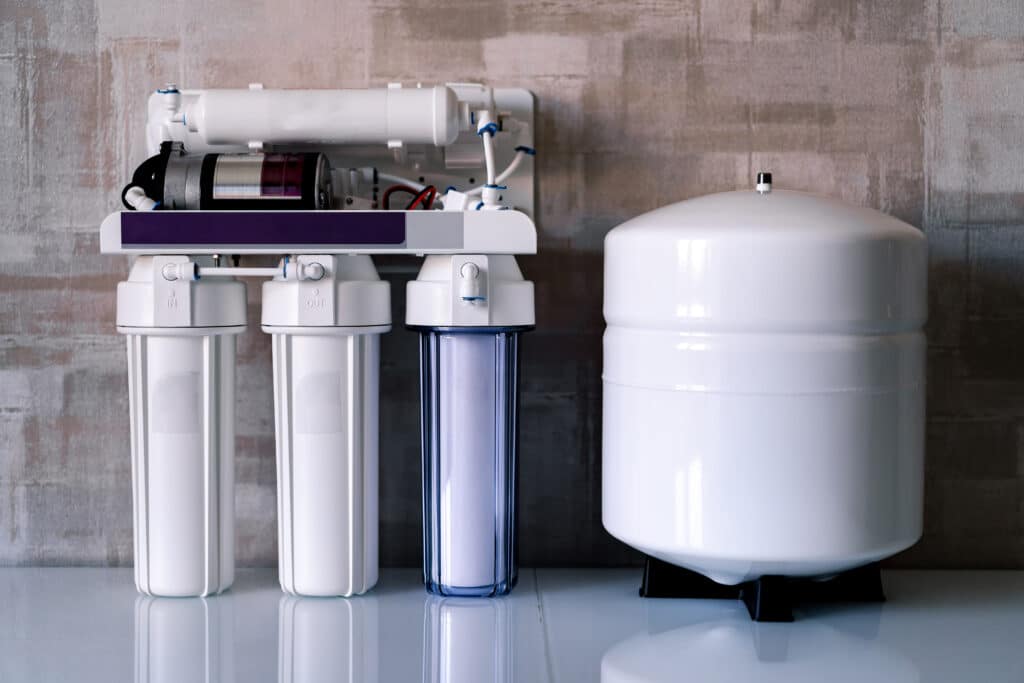
- Purified water (reverse osmosis): forces water through a membrane that strips out most dissolved solids, which suits operations that need consistent, low-mineral water, like beverage service, ice production, and labs
How to Find Out What is in Your Water
You don’t need to guess. Start with these steps:
- Pull your utility’s annual water quality report. It lists what was tested, what was found, and how it compares with the legal limit.
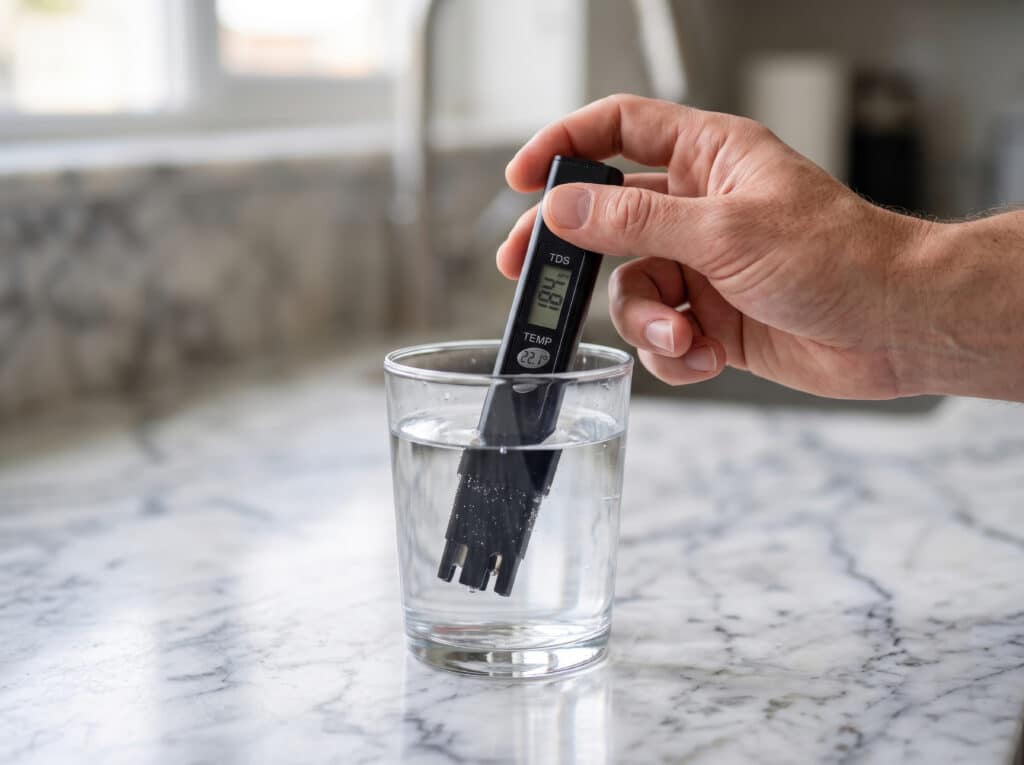
- Test your hardness. It’s the number that drives most commercial water problems, and a test gives you an actual figure rather than an estimate.
- Look at your equipment. Scale on fixtures, spotted glassware, and short equipment lifespans are all signs your water is working against you.
Is Tap Water Safe To Drink?
So, is tap water safe to drink in Utah, Nevada, and California? Yes, under the same EPA standards as everywhere else. Step Saver has helped businesses across the West get the water quality their operations need for more than 20 years, with water softeners, reverse osmosis systems, and salt delivery to keep them running. Contact us for a free consultation, and we’ll help you determine your water needs based on your actual usage.