Hard water can quickly degrade a business’s equipment and reputation. It causes annoying problems like film on the glassware, a water heater taking longer to recover than it used to, or a dish machine that needs service more often than the manufacturer said it would. By the time an employee or customer notices the effects of hard water, the minerals have already been working on your equipment for months.
A water softener is the equipment that stops all of that before it starts, and if you’re researching one for the first time, you probably want a straightforward answer before you start comparing models and quotes. Here’s what a water softener is, what it actually does for a commercial facility, and how to figure out which system your business needs.
What is a Water Softener System?
A water softener is a treatment system that removes the calcium and magnesium responsible for hard water before that water reaches your plumbing, your equipment, and your customers. Those minerals are harmless to drink, but they leave deposits behind anywhere water sits, heats, or evaporates, and those deposits are what turn into scale, spotting, and premature equipment failure.
How a Water Softener Works
The removal of minerals from hard water happens through a process called ion exchange:
- Hard water flows into a water softener’s tank filled with thousands of small resin beads that are charged with sodium ions.
- Calcium and magnesium carry a stronger positive charge than sodium, so they cling to the beads and release sodium into the water in their place.
- What leaves the tank is soft water, free of the minerals that cause the damage.
Eventually those resin beads fill up with hardness minerals and stop working, which is where salt comes in, in a process called regeneration:
- The system draws a concentrated salt solution called brine through the resin bed
- The sodium in that brine knocks the calcium and magnesium loose
- The whole mess gets flushed down the drain.
Regeneration is the reason a softener needs salt in the first place.
- Common FAQ: What if a water softener runs out of salt? Read our blog to hear the answer.
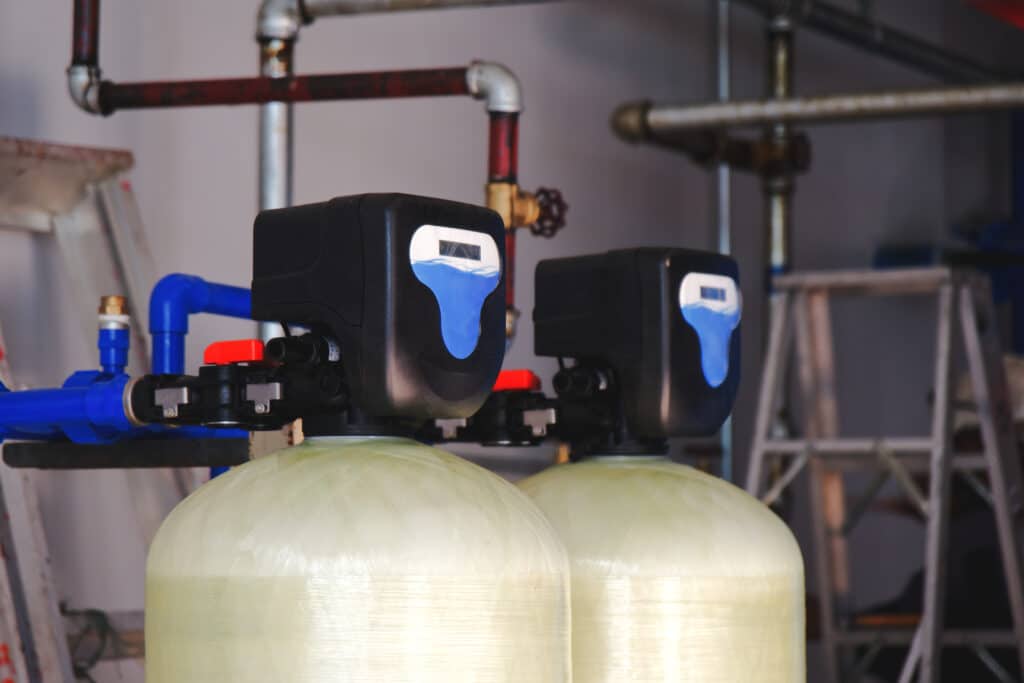
A commercial water softener system has three main components working together:
- The mineral tank, where hard water passes through the resin beads and comes out soft
- The brine tank, which holds the salt solution used to recharge the resin during regeneration
- The control valve, which tracks water volume and triggers regeneration when the resin needs recharging
What is a Water Softener Used For?
At the most basic level, a water softener is used for protecting everything downstream of it. In a home, that means fewer spots on the dishes and softer laundry. In a commercial facility, the stakes are considerably higher, because hard water is quietly raising your operating costs across every system that touches water.
Businesses in states with hard water, like Utah, Nevada, and California, feel the effects of hard water, especially the operations running at high volume all day. Restaurants and hotels see it in spotted glassware and dingy linens. Laundromats and car washes see it in detergent costs and finish quality. Manufacturing plants, labs, and any facility running a boiler see it in scale buildup that steals efficiency from equipment that was expensive to buy in the first place.
Wondering if a commercial water softener is worth it? Here’s what the system gives you in return:
- Longer equipment life for water heaters, boilers, ice machines, dish machines, and anything else that heats or moves water
- Lower energy costs, since scale forces heating equipment to work harder for the same result
- Less detergent and fewer cleaning products, because soft water lathers far more readily than hard water
- Fewer service calls and less unplanned downtime from scale-related failures
- Better water for the people who drink it, without the chalky mineral taste hard water leaves behind
Water Exchange Tanks vs. Water Softeners
After you’ve learned what a water softener is, it’s time to start shopping. During the buying process, you’ll almost certainly run into companies selling portable exchange tanks as an easier alternative to a real softener. The pitch is appealing, so it’s worth understanding what you’re actually comparing.
- A portable exchange tank holds resin that was regenerated somewhere else. When that resin is used up, a driver hauls the tank off your property and drops off a fresh one, and the old tank goes back to a warehouse to be cleaned and recharged.
- A built-in water softener skips all of that by regenerating its own resin on site with salt, which means it keeps producing soft water continuously without anyone scheduling a delivery.
That difference matters more than it sounds. Because an exchange tank has a fixed capacity and no way to recharge itself, water quality can slide as the resin nears exhaustion, and how much it slides depends on your usage and how well the exchange schedule was timed. Facilities that depend on stable water, like hotels, restaurants, healthcare, and manufacturing, tend to notice those swings in their equipment before they notice them anywhere else.
- Read our guide on portable exchange tanks vs. water softeners to learn more.
What is a Water Softener: FAQs
1. What happens if I don’t use a water softener?
Hard water keeps flowing through your building, and the minerals in it go to work on everything they touch. Here’s what tends to show up:
- Scale buildup inside pipes, boilers, water heaters, ice machines, and dish machines
- Higher energy bills, since scale insulates heating elements and forces them to work harder
- Equipment failing years earlier than the manufacturer projected
- Spotted glassware, dingy linens, and streaky surfaces your customers notice
- Reduced water pressure as scale narrows the flow path inside your plumbing
- More frequent service calls and unplanned downtime
- Descaling and repair invoices that add up to more than a softener would have cost
2. How much does a water softener raise your water bill?
A correctly operating water softener shouldn’t raise your commercial water bill more than 1% to 2%, which is usually $1 to $5 per month for a small business or more for mid- to large-sized companies. If your water softener isn’t working correctly, it can waste thousands of gallons of water and burn a hole in your pocket. If that’s happening to you, it’s essential to call a water softener repair team, such as Step Saver, to diagnose and fix the issue right away.
3. How do I choose the right water softener?
Choosing the right water softener starts with testing your incoming water and pulling real usage numbers off your utility bills, because everything else in the decision depends on those two figures. Once you know your hardness in grains per gallon and your daily gallons, you can calculate the softening capacity your facility actually needs and size the system to your peak demand rather than your average day.
- Our complete guide to sizing a commercial water softener walks through the formulas, the single-tank versus twin-tank decision, and why planning for future growth keeps you from replacing an undersized unit in a few years.
4. How much does a water softener cost?
Commercial water softener equipment typically runs from $2,000 to $20,000 or more depending on capacity, tank configuration, and features, and installation adds to that depending on your plumbing, drain access, and local permit requirements. After the install, your ongoing costs are mostly salt, the water used during regeneration, and routine service, which is considerably less than what an exchange tank program bills you every month.
- Read our breakdown of water softener cost, which covers every line item so you can build a budget that holds up.
Get the Right Water Softener for Your Facility
A water softener does one job, and it does it well. It pulls the hardness minerals out of your water so your equipment lasts longer, your utility bills stay reasonable, and the water your customers and employees use is genuinely better. The trick is matching the system to your building’s actual usage and hardness rather than guessing.
Step Saver has been helping businesses across Utah, Nevada, and California do exactly that for more than 20 years. Our commercial water softener installation and repair team handles the site assessment, sizing, installation, and service, and we back it all up with salt delivery so your system never sits idle. Contact us to talk through what your facility needs and get a quote that reflects your real water usage.