For businesses dealing with hard water, choosing the right water treatment solutions can significantly impact operational costs, equipment performance, and long-term efficiency. In recent years, water exchange tank programs have become increasingly popular, with various companies promoting them as a convenient alternative to traditional water softeners. These systems are often marketed around convenience, lower upfront costs, and reduced on-site maintenance. However, many businesses are left wondering whether exchange tanks truly save money over time or just shift costs elsewhere.
When comparing a portable exchange tank system to a traditional built-in water softener, it’s important to look beyond marketing claims and evaluate how each option performs over the long term. From water quality consistency and operational efficiency to labor demands and long-term costs, there are significant differences between the two systems. Keep reading for a full breakdown of how exchange tanks and water softeners work, what businesses should consider before switching, and which option may offer the best long-term value.
What Is a Portable Exchange Tank?
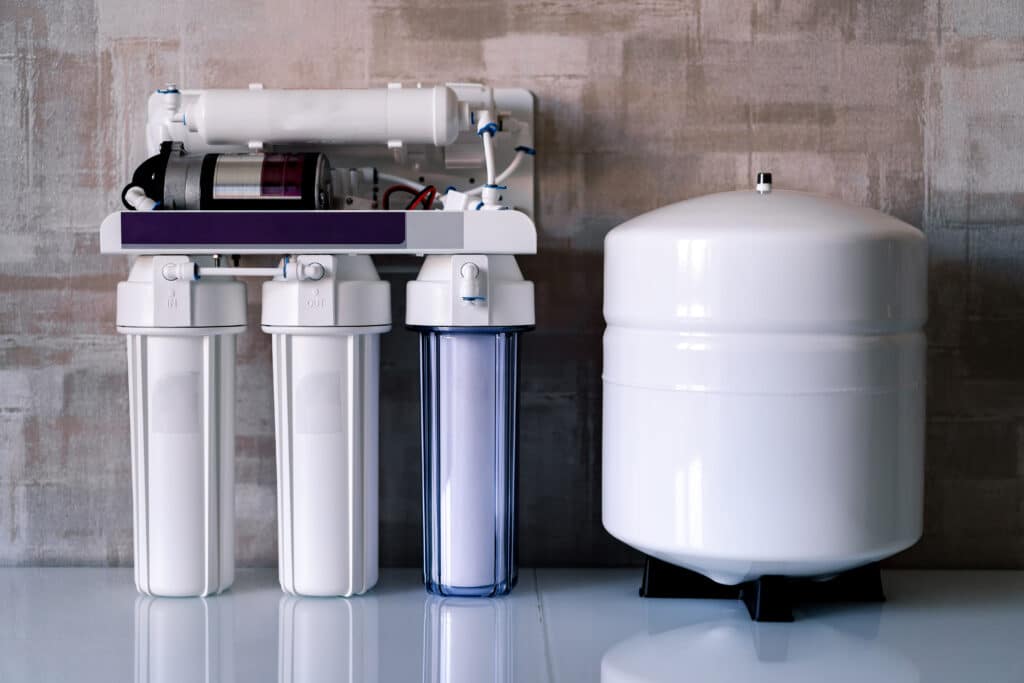
A portable exchange tank system uses tanks filled with resin that have already been regenerated at an off-site facility. Once the resin in the tank is exhausted, the entire tank is removed from the customer’s property and replaced with a regenerated unit. The used tank is then transported back to a warehouse where it is cleaned, regenerated, and prepared for future delivery.
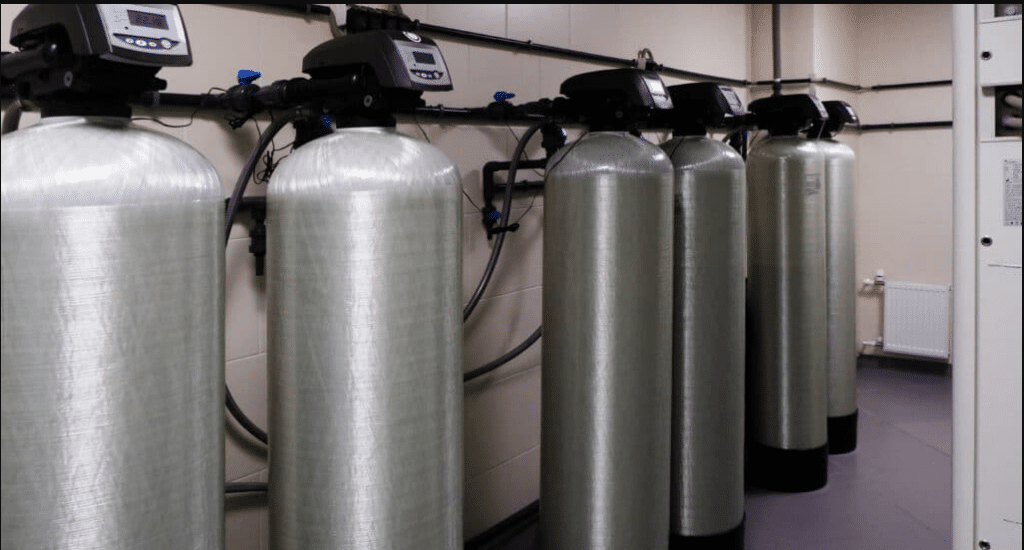
This differs significantly from a traditional water softener. Instead of regularly swapped tanks, a standard softener continuously regenerates its own resin on-site using salt and an ion-exchange process. The system automatically removes hardness minerals like calcium and magnesium while restoring the resin internally, allowing the unit to provide ongoing soft water without requiring tank replacement or deliveries.
While exchange tank companies often market their systems as “soft water” solutions, many businesses discover that water quality can vary depending on tank conditions, exchange schedules, and the extent to which the resin is exhausted before replacement.
The Difference Between Water Conditioning and True Softening
One of the biggest misconceptions about exchange tank systems is that they perform the same function as a traditional softener. In reality, there can be important differences between water conditioning and true water softening. Traditional water softeners actively perform continuous ion exchange. As hard water flows through the system, calcium and magnesium ions are removed and replaced with sodium ions. This process consistently produces soft water throughout the day.
Exchange tanks, however, are often better described as treated or conditioned water systems rather than continuously regenerating softening systems. Once the resin capacity in the tank is exhausted, water quality can begin to decline until the next scheduled exchange. This means businesses may not always receive the same consistent soft water quality they would get from a properly maintained built-in softener. For industries that rely heavily on stable water quality, such as hospitality, food service, healthcare, or manufacturing, this inconsistency can become a significant issue over time.
Comparing Long-Term Costs: Water Exchange Tanks vs. Water Softeners
One of the primary selling points for exchange tank providers is reduced upfront cost. Since businesses do not need to purchase a large built-in softener system immediately, the monthly delivery model may appear more affordable initially. However, long-term costs tell a different story. With portable exchange tanks, businesses pay ongoing recurring fees for:
- Tank delivery and pickup
- Resin regeneration
- Transportation and fuel
- Warehouse processing
- Labor costs
- Driver scheduling and logistics
- Equipment handling and maintenance
Over five years, these recurring service charges can add up significantly. Traditional water softeners, on the other hand, typically involve a large upfront installation cost for far lower recurring operational expenses. Once installed, the primary ongoing costs are salt usage, occasional maintenance, and water consumption during regeneration cycles.
These tanks are extremely heavy, creating ongoing physical strain for workers who handle them daily. As a result, exchange tank providers may face higher workers’ compensation risks and labor-related operational costs. Those labor expenses don’t disappear; they are ultimately built into the recurring service pricing businesses pay over time.
By comparison, a permanently installed water softener eliminates much of this physical handling entirely. The system remains in place and regenerates automatically, eliminating the need for routine tank swaps and reducing transportation demands and labor costs considerably.
Efficiency Differences Between the Two Systems
Efficiency is another major factor businesses should evaluate. Because exchange tanks have a finite resin capacity, they must be swapped frequently based on water usage and hardness levels. Businesses with high water demand may require more frequent exchanges, leading to more service interruptions and increased transportation needs.
Traditional water softeners are generally far more efficient for ongoing, high-volume use. Modern systems are designed to regenerate only when needed, helping optimize salt and water usage while continuously producing soft water. For facilities with heavy daily demand, relying on repeated portable exchange tank deliveries can quickly become less practical and less efficient than a built-in system designed for continuous operation.
Water Quality Consistency Matters
Many businesses underestimate how important consistent water quality really is until equipment performance begins to suffer. Hard water fluctuations can impact:
- Boilers and water heaters
- Ice machines
- Dishwashers
- Glassware appearance
- Laundry systems
- Plumbing lifespan
- Product quality
- Customer experience
Traditional softeners provide much more stable, predictable water quality because regeneration occurs automatically within the system. Exchange tanks, however, may experience varying performance levels depending on timing, resin condition, and delivery schedules. Businesses trying to maintain strict operational consistency often find built-in systems more reliable long-term.
Why Some Businesses Are Considering Exchange Tanks
To be fair, exchange tank systems do offer a certain convenience. Providers often handle installation, regeneration, and delivery scheduling, reducing the customer’s on-site maintenance responsibilities. Businesses may also appreciate avoiding an initial capital investment.
However, convenience does not always equal long-term savings or efficiency. In many cases, businesses that switch to exchange tanks eventually discover that recurring service costs, inconsistent soft water delivery, and ongoing operational dependence outweigh the short-term benefits. That’s why it’s important to evaluate both systems carefully, not just based on upfront pricing, but based on five-year operational costs, water quality consistency, labor demands, and scalability.
Which Option Makes More Financial Sense? Portable Exchange Tanks vs. Water Softeners
For many businesses, traditional water softeners ultimately provide better long-term value. While the upfront installation investment may be higher initially, the long-term operating costs are often significantly lower than recurring exchange tank service fees.
Built-in softeners also eliminate many inefficiencies associated with repeated transportation, warehouse regeneration, and heavy labor-intensive handling. Most importantly, they provide continuous soft water rather than relying on periodic tank replacement schedules. When comparing five-year costs, businesses should consider not just monthly pricing, but also:
- Labor and transportation expenses
- Water quality protection
- Equipment protection
- Operational efficiency
- Downtime risks
- Long-term maintenance needs
Looking at the bigger picture often reveals that traditional softeners provide a stronger return on investment over time.
Choose Step Saver for Long-Term Water Treatment Solutions
At Step Saver, we believe that you deserve water treatment solutions built around long-term efficiency, consistency, and value, not just short-term convenience. With over 25 years of experience serving businesses across California, Nevada, and Utah, our team helps clients implement dependable water-softening systems that deliver continuous soft water while reducing operational costs over time.
Unlike recurring exchange tank delivery programs, Step Saver’s solutions focus on efficiency, equipment protection, and reliable long-term performance. Our team can help evaluate your water usage, operational demands, and overall costs to determine the best solution for your facility.
If you’re considering switching from a portable exchange tank system or want to better understand the long-term cost differences between exchange tanks and traditional softeners, we’re here to help you make an informed decision. Contact Step Saver today to learn more about reliable water treatment solutions designed for long-term savings, efficiency, and consistent soft water performance.